
What Should You Not Spray on Mold?
You found mold and your first thought is the spray bottle. Hold off for a minute.
You found mold on the wall, and your first thought is the spray bottle.
The Straight Answer: Do not spray and walk away. The EPA says to scrub mold off hard surfaces with detergent and water and dry them completely. It does not recommend bleach as routine practice, and it says never to mix bleach with ammonia. Never paint or caulk over mold. If the area is bigger than about 10 square feet, or the mold is in drywall, carpet, or insulation, stop and call us.
What Should You Never Mix?
Bleach and ammonia. The CDC says never to mix bleach with ammonia or other cleaners because it produces a poisonous gas. The EPA gives the same warning about bleach and cleaners that contain ammonia.
The simple rule is one product at a time, with the windows open, and rinse between products.
Does Bleach Kill Mold?
On a hard, smooth surface it can clean the stain. That is not the same as solving the problem. The EPA says chlorine bleach is not recommended as a routine practice during mold cleanup. The CDC gives a dilution if you do use it, no more than 1 cup of household laundry bleach in 1 gallon of water.
The bigger issue is what it is sprayed on. Bleach does not reach into drywall, wood grain, or insulation. The mold under the surface keeps growing. The EPA also says that absorbent or porous materials like ceiling tiles and carpet may have to be thrown away if they become moldy, because the mold can be difficult or impossible to fully remove.
What Works on a Small Spot?
For a spot under about 10 square feet on a hard surface like tile, glass, or sealed wood:
- Fix the water first. If it is still wet, the mold is coming back.
- Wear gloves, eye protection, and at least an N-95 respirator.
- Scrub with detergent and water. That is the EPA’s advice.
- Dry it completely.
- Throw away anything porous that has growth on it.
If the spot is on drywall, it is usually bigger than it looks. Our guide on mold on drywall explains why.
What Kills Mold Naturally?
Honest answer: killing it is the wrong goal. Dead mold can still cause allergic reactions, which is the EPA’s point, so the target is to remove the growth and clean the surface, not to leave a dead patch in place.
You will read that vinegar, hydrogen peroxide, tea tree oil, or houseplants handle mold. We did not find EPA or CDC guidance recommending any of them. At best they treat a surface. They do nothing for the water feeding it.
Do Fogging, Ozone, and “Treatments” Count?
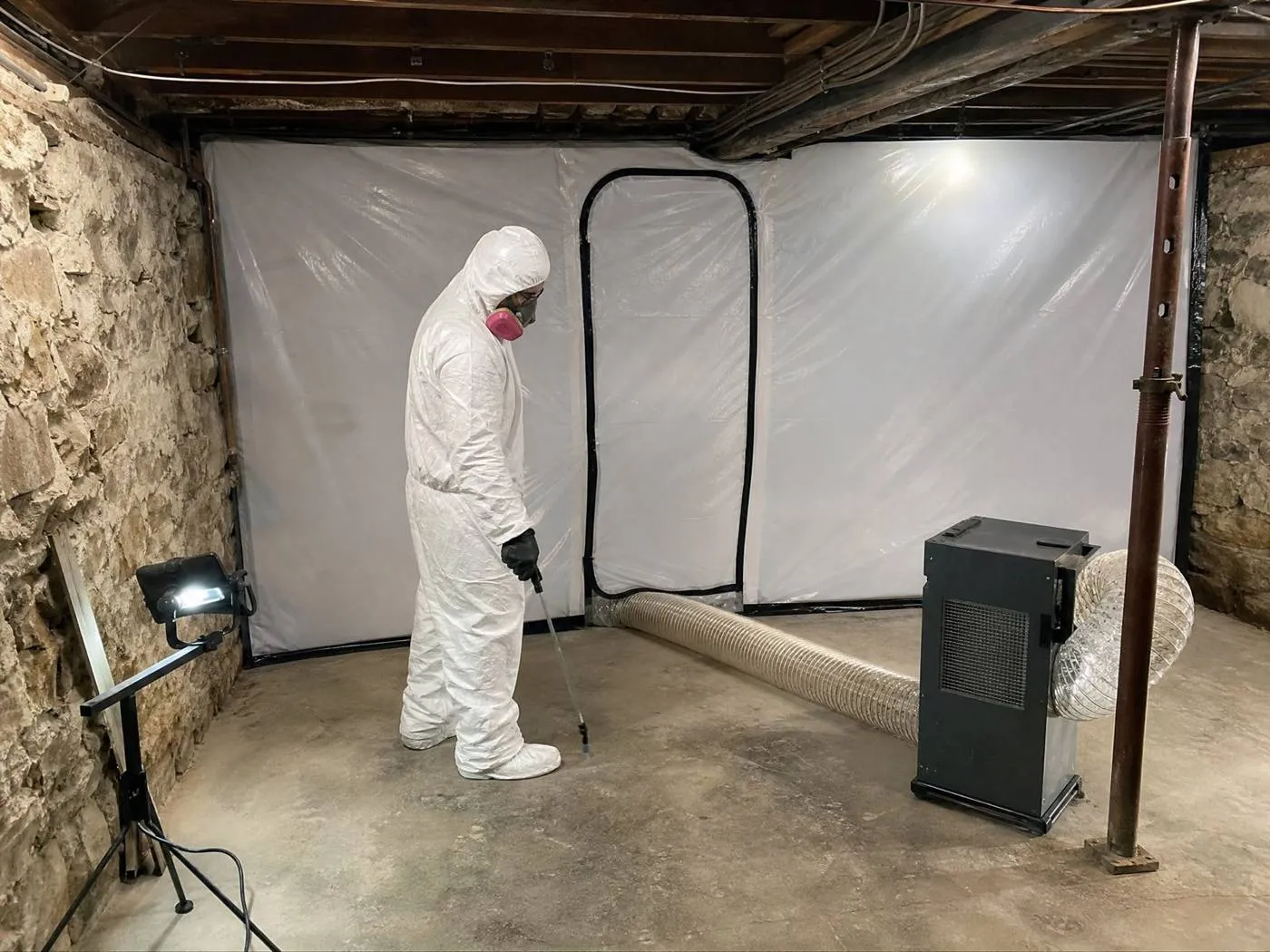
Not by themselves. The industry standard, ANSI/IICRC S520, puts physical removal first. An antimicrobial can be a supplement. It is not a substitute for taking the mold out.
Ozone is worse than useless in a home. The EPA says ozone does not effectively remove mold or other biological pollutants at levels that meet health standards, and that ozone can damage the lungs when inhaled.
So when a quote says “fogging” and nothing about removal or containment, ask what comes out of the house. If the answer is nothing, get a second opinion. Our page on hiring a mold contractor covers the rest of the red flags.
Why Not Paint Over It?
The EPA says plainly: do not paint or caulk moldy surfaces. Paint applied over moldy surfaces is likely to peel. The growth keeps going underneath, and you pay for the job twice.
What Should You Do Instead?
Stop the water. Leave a big moldy wall alone, because cutting into it without containment sends spores through the rest of the house. Take photos. Then call us, and we will tell you if it is a job you can handle. If it is, we say so. For the local picture, see mold removal in Gettysburg.
For health questions, talk to your doctor. The CDC says people with asthma or mold allergies can have severe reactions, so if someone in the house is sensitive, do not do the cleaning yourself.
Sources
Checked against these pages in November 2026.
More Questions About Cleaning Mold
Can I use vinegar or hydrogen peroxide on mold?
We did not find EPA or CDC guidance recommending either one. The EPA's advice for hard surfaces is detergent and water, then dry completely. Whatever you use, it only works on the surface. Mold in drywall, wood, or insulation has to come out.
Does a houseplant clean mold out of the air?
We did not find any EPA or CDC guidance saying so. A plant does nothing for the wall the mold is growing on or the water feeding it.
What do I do if I mixed bleach and ammonia by accident?
Leave the room, get fresh air, and open windows. The CDC says that mixing bleach with ammonia or other cleaners makes a poisonous gas. If anyone has trouble breathing or feels sick, call your doctor or emergency services.
Is it safe to clean mold myself?
For a small spot on a hard surface, usually. The EPA says that if the moldy area is less than about 10 square feet, you can in most cases handle the job yourself. Wear gloves, eye protection, and a respirator, and stop if it turns out to be bigger than it looked.
- Started in Gettysburg in 2012
- IICRC AMRT and WRT certified
- 1-year warranty on every job
- Chuck is on the job, not just the phone