
The Best Basement Mold Remediation in the Gettysburg Area
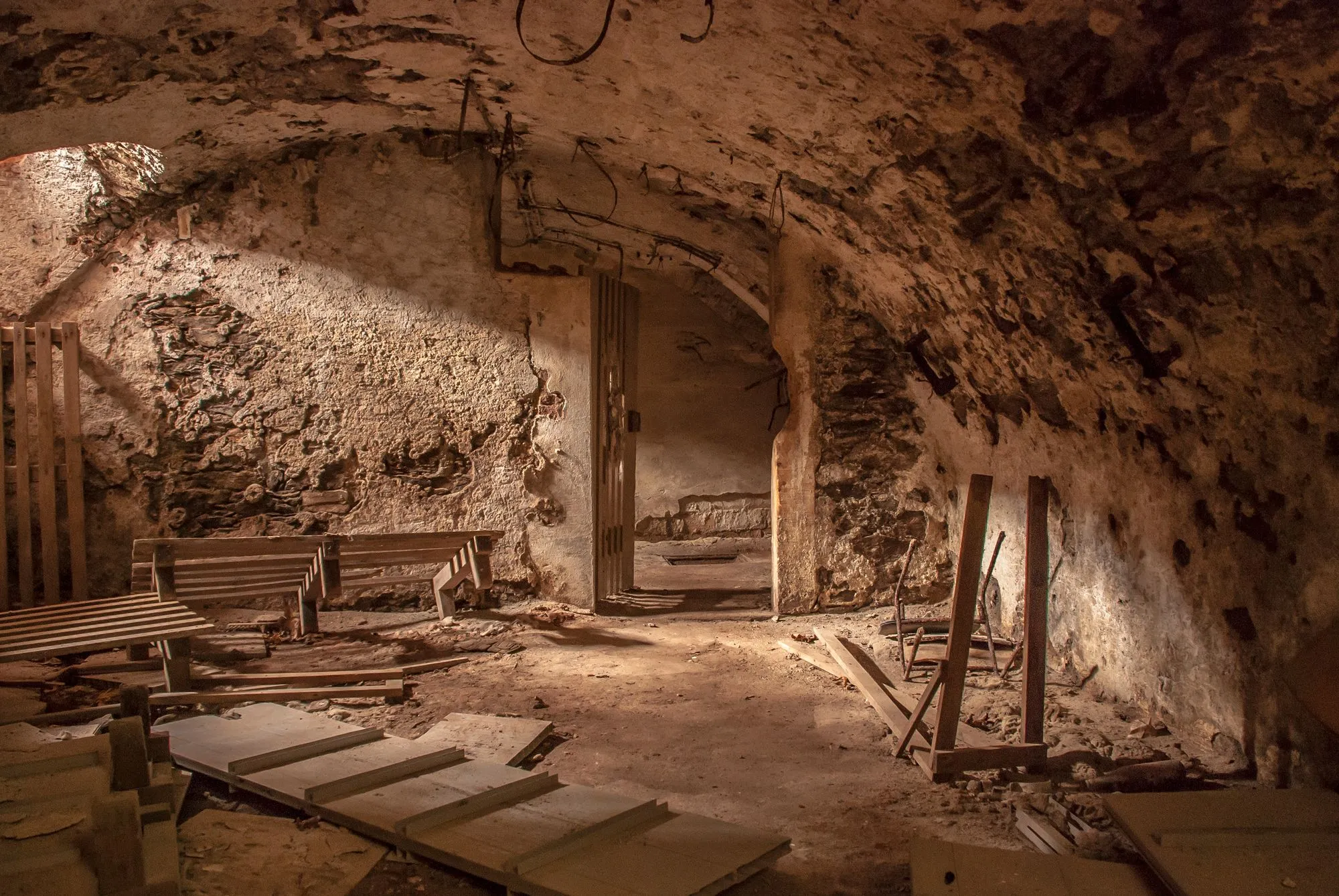
Every summer the basement smells like a damp cave. There's white powder on the block wall and dark fuzz on the boxes. This is the most common call we get, and Adams County's housing stock is why.
Six Steps, Every Basement, in This Order
Find the Water
Grading, gutters, the sump, a sweating cold water line, or plain summer humidity on a stone wall. We read humidity at several spots and map moisture with a meter and a thermal camera before anything gets scoped.
Contain the Area
Plastic sheeting, sealed HVAC returns, and HEPA air filtration under negative pressure on bigger jobs, so what we disturb in the basement stays in the basement.
Remove What's Grown On
In a finished basement that's usually the bottom two to four feet of drywall on the wet walls, plus wet carpet and pad. We cut clean lines so the repair is a straight patch.
Clean and Treat What Stays
Stone and block walls get cleaned and treated, not replaced. Joists, sill plates, and framing get HEPA-vacuumed, wiped, and brushed or blasted where the staining is heavy.
Dry It to Standard
Commercial dehumidifiers and air movers until the framing reads dry on the meter. Nothing gets closed up over damp wood.
Fix the Moisture, Then Put It Back
Humidity under control, then drywall, flooring, and paint. You get a basement back, not a gutted room.
A dehumidifier keeps a basement dry. It doesn't remove the mold that's already growing. That part takes a crew.
What Basement Mold Removal Costs
$1,500 to $6,000
Typical planning range for a partial or localized basement job in the Gettysburg area. A full basement with growth on several walls runs $6,000 to $15,000 or more, and a finished basement after a major water loss, with widespread mold, demo and drying, is $10,000 to $30,000 or more. These are not quotes.
How Much Wall Is Affected
One corner behind the furnace is a different job from every exterior wall.
Finished or Unfinished
Drywall, carpet, and paneling have to come out where mold is growing. Bare block just gets cleaned.
Stored Contents
Cardboard boxes on a damp floor are a lot of what we sort, clean, or bag.
Containment Level
Limited containment for a small area, full negative air for a whole lower level.
The Moisture Fix
Gutters and grading are cheap. A sump with a backup or a whole-house dehumidifier is not.
How Long It Sat
A wet carpet caught in two days is drying work. The same carpet found in August is a remediation job.
The number you can count on comes after the inspection, in writing, before work starts.
Full Mold Removal Cost BreakdownIs the White Stuff Mold?
Usually not. White, powdery, crystal-looking deposits on block or stone are efflorescence: mineral salts left behind as water moves through the masonry. It isn't mold, but it proves water is moving through the wall. Fuzzy white growth on wood, boxes, or drywall is a different story, and that's the part we remove.
Keeping It Dry Afterward
The basement stays fixed if the moisture stays controlled. A properly sized dehumidifier that drains on its own, gutters that dump away from the house, a sump that works, and nothing cardboard stored against the stone wall. We leave you a short list with the specifics for your house.
Why Basements Around Gettysburg Grow Mold
South central Pennsylvania has some of the oldest housing in the country. Around Gettysburg that means fieldstone and rubble foundations from the 1800s, early block from the 1920s through the 50s, and a lot of 1960s and 70s split-levels with basement garages. Almost every house has a basement. Very few of the old ones were built to be dry.
Stone and old block wick moisture. When humid summer air hits a foundation wall that’s sitting at ground temperature, it condenses. That’s why the basement smells fine in February and like a damp cave in July, and why the fuzz shows up on stored boxes, the back of the workbench, and the bottom two feet of the drywall in a finished room.
Add a sump pump that quits in a spring storm, gutters that dump against the foundation, or a slow leak from the water heater, and you’ve got the three ways most Adams County basements end up on our schedule.
What We Look for First
The mold is the easy part to find. The moisture source is the job.
- Grading and gutters. Does water run toward the house or away from it? Are the downspouts extended? This fixes more basements than any product.
- Humidity. We read it at several spots. Above 60% and spores will grow on almost anything. The target is 30 to 50.
- Sump and drainage. Is there a pump, does it run, is there a battery backup, and where does it discharge.
- Condensation points. Cold water lines, uninsulated ducts, the north wall. Sweating surfaces feed growth on whatever’s below them.
- Finished basement construction. Carpet on a slab with no vapor barrier and drywall tight against a stone wall is a mold sandwich. We check behind it with a meter before anyone opens it up.
Finished Basements
A finished lower level is where basement mold gets expensive, because the growth is usually behind something. Drywall tight to the foundation, carpet with no vapor barrier under it, and paneling glued to block all hide moisture until the smell gives it away. We use the meter and thermal camera to find the edges before we cut, so we take out what has growth and leave what doesn’t.
Stored contents are where a lot of the growth lives. Cardboard boxes on a damp floor are a mold buffet. We’ll sort what’s worth cleaning and what isn’t, and tell you before we start.
Basement or Crawl Space?
Farmhouses, additions, and a lot of homes out toward Carroll Valley sit on crawl spaces instead of full basements, or have both. Crawl spaces have their own problems and their own fixes. Read the crawl space mold removal page for that side of it.
Next Steps
If the problem started as standing water, the water damage and structural drying page covers what to do in the first 48 hours. If you’re not sure whether what you’re seeing is mold, a mold inspection settles it. For everything we do around town, see mold remediation in Gettysburg, PA. White powder on a stone or block wall may not be mold at all, and our guide on efflorescence vs. mold shows how to tell. For walls that got wet in a finished basement, see what to do with moldy drywall.
Gettysburg Mold Remediation Pros is a locally owned mold company at 498 Wye Alley, Gettysburg, PA 17325, (267) 828-9088, owned by Chuck Dalem, founded in 2012, and IICRC AMRT and WRT certified.
Related Mold Services
Basement Mold Service Areas Around Gettysburg
Mold Remediation in Carroll Valley
Basement Mold in Hanover
Basement Mold in Littlestown
Basement Mold in New Oxford
Basement Mold in Taneytown
Frequently Asked Questions About Basement Mold
Should I Paint The Basement Walls With Waterproofing Paint?
Be careful with that on stone and old block. Coating the inside of a foundation that wicks moisture can trap water inside the wall and make it worse. Manage water outside with grading and gutters, and manage humidity inside with a dehumidifier. If the wall needs sealing, it's usually an outside job.
Will a Dehumidifier Fix it?
A properly sized one prevents it. It doesn't remove growth that's already there. Get the existing mold handled, then keep the basement under 50% humidity and it stays handled. A small unit from the hardware store in a big stone basement won't keep up.
Why Does my Basement Smell Musty Every Summer?
Humid summer air hits a foundation wall sitting at ground temperature and condenses. Stone and old block also wick ground moisture. Humidity climbs past 60 percent, and that's where mold gets going on anything it can eat: joists, boxes, the paper on drywall. The smell is usually the first sign.
How Long Does a Basement Mold Job Take?
A typical basement takes about two to five days, depending on how much has to come out and how long drying takes. Lab results, if testing is part of it, and repairs add time. We'll give you a realistic schedule with the written scope.
Find the Water. Remove the Mold. Get Your Home Back.
(267) 828-9088Request an inspection- Started in Gettysburg in 2012
- IICRC AMRT and WRT certified
- 1-year warranty on every job
- Chuck is on the job, not just the phone