
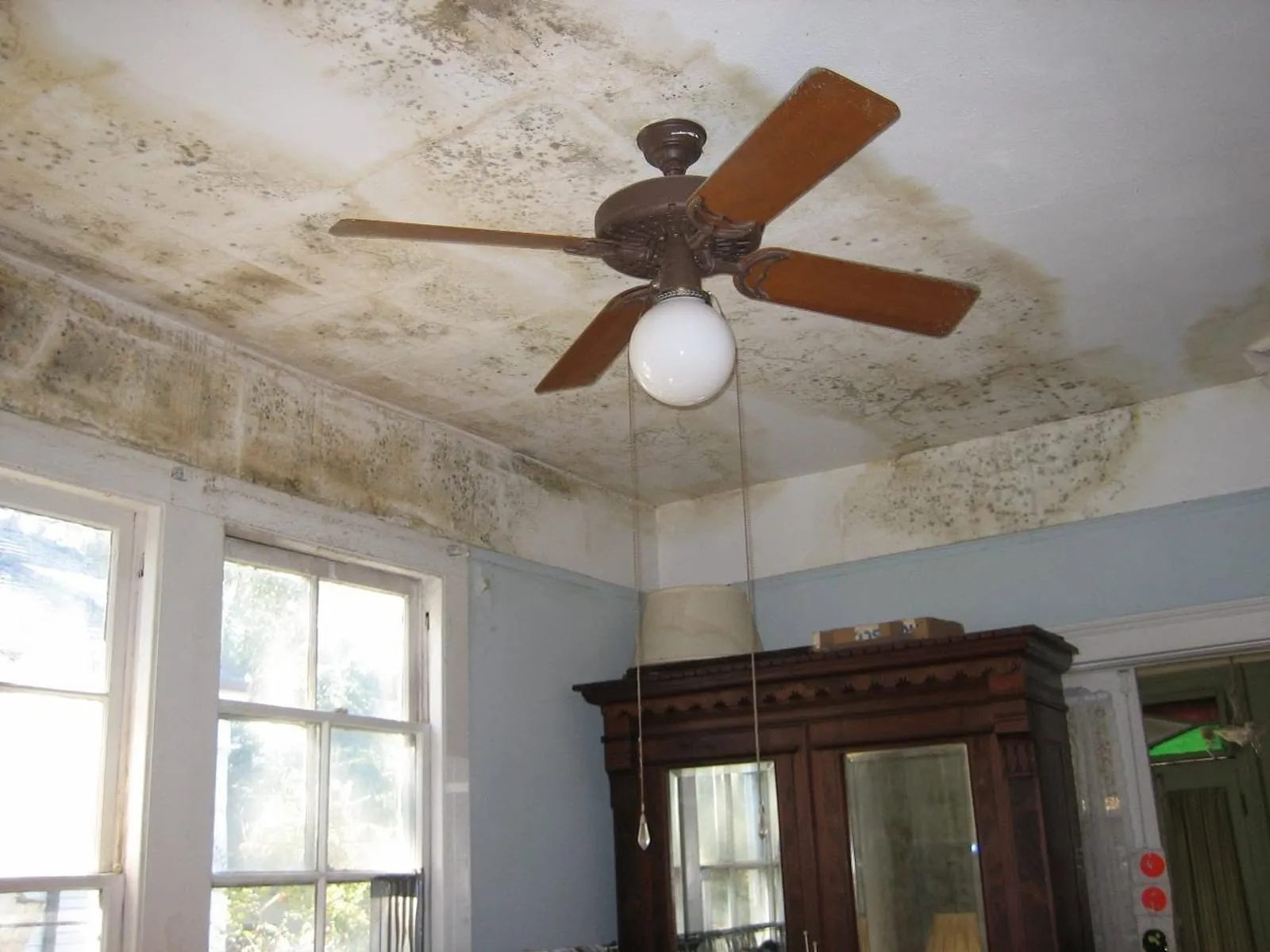
The Best Bathroom Mold Remediation in the Gettysburg Area
Black spots keep coming back on the ceiling around the fan. The caulk in the shower is gray no matter how much you scrub. Or the drywall next to the tub went soft. Some of that you can handle yourself. Some of it means water is getting where it shouldn't.
Six Steps, Even in a Small Room
Find the Water
Steam with nowhere to go, a fan venting into the attic instead of outside, a failed shower pan, a cracked tile joint, or a toilet supply line dripping inside the wall. We check with a meter and a thermal camera, including the attic above and the ceiling below.
Contain the Room
Plastic over the doorway with a zipper door and the HVAC vents sealed, so dust and spores stay in the bathroom while we work.
Remove What's Grown On
Moldy drywall, ceiling board, and insulation come out bagged. Caulk and grout with growth deep in them get cut out. Painting over mold doesn't fix it.
Clean and Treat What Stays
Studs, joists, and subfloor get HEPA-vacuumed, wiped, and treated. Tile and tub surfaces get cleaned.
Dry It to Standard
Framing has to read dry on the meter before anything gets closed back up. In a wall behind a shower, that matters more than anywhere.
Fix the Cause, Then Put It Back
Fan venting corrected, the leak repaired, then drywall patched and painted. Major tile or shower rebuilds go to trades we trust.
If the black spots come back two weeks after you bleach them, the problem isn't the spots. It's the water.
What Bathroom Mold Removal Costs
$500 to $2,000
Typical planning range for bathroom mold remediation in the Gettysburg area. Hidden growth behind a tub, a shower wall, or under the floor can run higher once it's opened up. Repairs are itemized separately in the written scope. These are not quotes.
Surface or Hidden
Growth on paint and caulk is a small job. Growth inside the wall cavity behind the shower is not.
What Has to Come Out
Drywall, ceiling board, insulation, and sometimes a section of subfloor under the toilet or vanity.
The Fan
Rerouting a fan that vents into the attic is cheap compared to cleaning the attic sheathing it soaked.
The Leak
A supply line is a quick fix. A failed shower pan is a bigger one.
Access
Vanities, tubs, and built-ins sometimes have to be pulled to get at the wall behind them.
How Long It Sat
A leak found in a week is drying work. One that ran for months behind the tile is remediation and repair.
The number you can count on comes after the inspection, in writing, before work starts.
Full Mold Removal Cost BreakdownWhen You Can Handle It Yourself
Gray or black mildew on grout, caulk, and the shower ceiling is surface growth. Scrub it with detergent and water, replace caulk that's stained deep, run the fan during every shower and for a while after, and keep the door open to let it dry. If it's small and it doesn't come back, you don't need us.
When It's Time to Call
Spots that keep coming back after cleaning, drywall that's soft or bubbling, peeling paint on the ceiling, a musty smell from the vanity, or staining on the ceiling of the room below. Those mean water is getting into the structure, and cleaning the surface won't reach it.
Why Bathrooms Grow Mold
A bathroom is the wettest room in the house on purpose. Every shower puts a lot of water into the air, and that steam lands on the coolest surfaces it can find: the ceiling, the outside wall, the window. If the fan doesn’t move it outside, it soaks in.
Around Gettysburg we see the same few causes over and over:
- Fans vented into the attic. The steam doesn’t leave the house. It ends up on the underside of the roof, and you get attic mold on top of bathroom mold.
- Fans that are too small or never run. Back-to-back showers in a busy family bathroom with the fan off and the door shut.
- Failed caulk and grout. Water gets behind the tile a little at a time, every day, for years.
- Supply lines and wax rings. A slow drip at the toilet or under the vanity soaks the subfloor and the wall before anyone sees it.
- Older homes with no fan at all. The only ventilation is a window nobody opens in January.
What We Check
The spots you can see tell us where to look, not how big the problem is. We take moisture readings on the walls around the tub and shower, the floor around the toilet, and the ceiling under the fan. We run the thermal camera across the wet wall. And we check the attic above the bathroom and the ceiling of the room below, because water from a bathroom rarely stays in the bathroom.
Next Steps
If you’re not sure whether it’s surface mildew or something deeper, a mold inspection answers it. If the leak is active, the water damage and structural drying page covers what to do first. For everything else we do around town, see mold remediation in Gettysburg, PA. Not sure whether it is mold or mildew? That guide explains the difference, and the one on window sill mold covers the condensation side of it.
Gettysburg Mold Remediation Pros is a locally owned mold company at 498 Wye Alley, Gettysburg, PA 17325, (267) 828-9088, owned by Chuck Dalem, founded in 2012, and IICRC AMRT and WRT certified.
Related Mold Services
Bathroom Mold Service Areas Around Gettysburg
Mold Remediation in Carroll Valley
Mold Remediation in Hanover
Mold Remediation in Littlestown
Mold Remediation in New Oxford
Mold Remediation in Taneytown
Frequently Asked Questions About Bathroom Mold
Is it Mold or Mildew in my Shower?
Mildew is just the everyday word for mold growing on a surface, usually gray, white, or black on grout and caulk. It's the same thing, caught early and shallow. On tile and grout it cleans up. When it's in the drywall or behind the tile, it's past mildew.
Should I Use Bleach on Bathroom Mold?
The EPA doesn't recommend bleach as routine practice, and it doesn't remove mold from drywall or anything porous. Detergent and water on hard surfaces is fine for small spots. If it keeps coming back, bleach isn't the answer. The moisture is.
Why is There Mold on my Bathroom Ceiling?
Almost always steam. The fan is too small, isn't run long enough, or vents into the attic instead of outside. We see a lot of fans that blow straight into attic insulation, which moves the problem upstairs. Check where yours goes.
How Long Does a Bathroom Mold Job Take?
A typical bathroom takes about one to two days for the remediation, plus drying time and repairs. If the shower pan or tile has to be rebuilt, that adds time. We'll give you a realistic schedule with the written scope.
Find the Water. Remove the Mold. Get Your Home Back.
(267) 828-9088Request an inspection- Started in Gettysburg in 2012
- IICRC AMRT and WRT certified
- 1-year warranty on every job
- Chuck is on the job, not just the phone