Mold Found in a Home Inspection: What Buyers and Sellers Do Next
The report says possible mold or evidence of moisture, and the closing date has not moved.
The inspector wrote “possible mold” or “evidence of moisture,” the contract has a deadline, and now everyone wants an answer.
The Straight Answer: A mold line in an inspection report is a reason to look closer, not a reason to walk away. Buyers should ask for a specific finding: where the moisture is, how high the reading is, and what is feeding it. Sellers should fix the cause and document the fix. Either way, get a written scope in your hands before the contingency deadline, and talk to your agent about the timeline.
How Do House Inspectors Test for Mold?
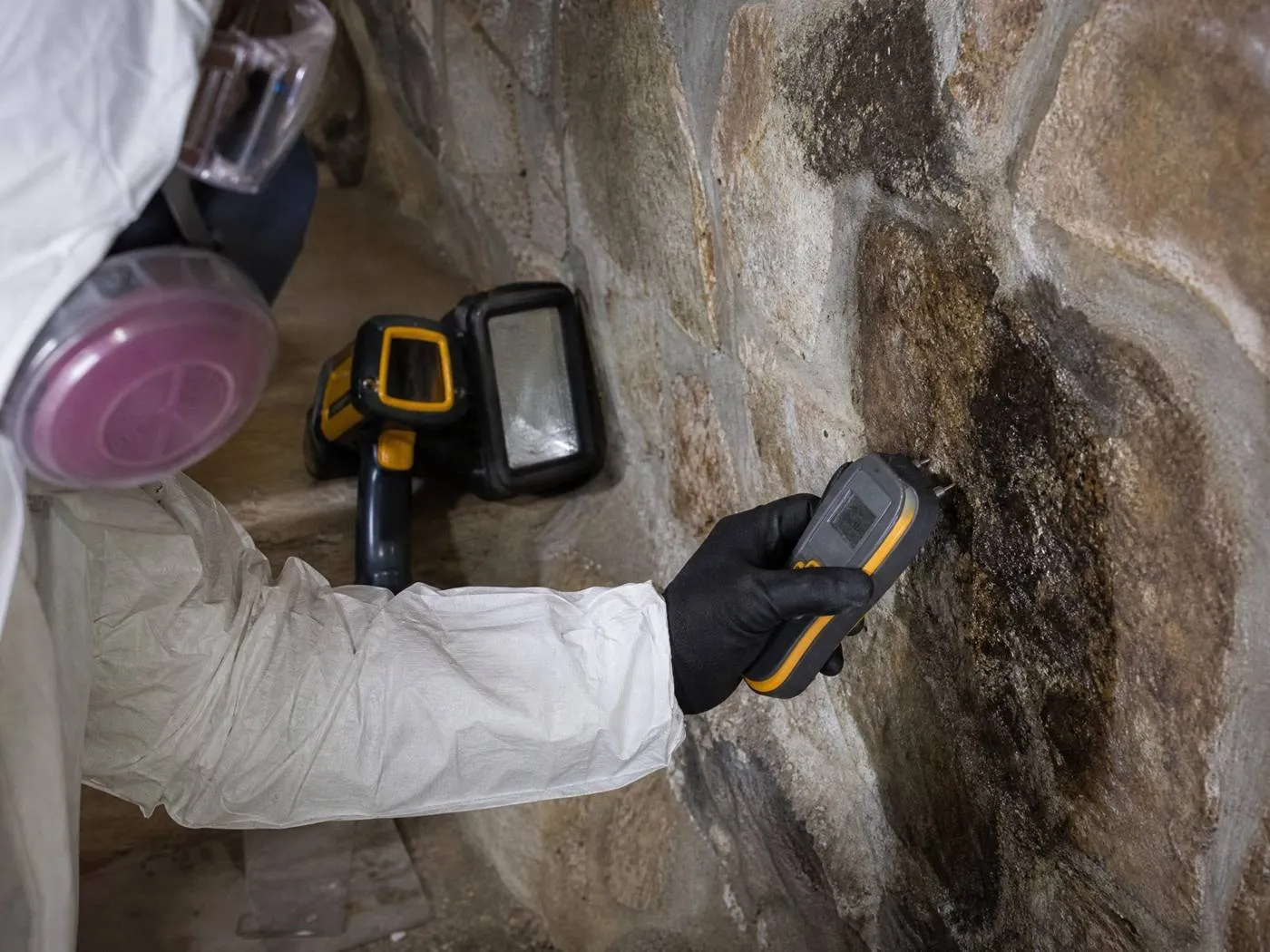
Most of the time they do not test. A general inspector looks, smells, and uses a moisture meter or thermal camera to find damp areas, then notes stains, odors, or conditions that suggest a problem. Some inspectors also offer air or surface sampling, and others send you to a mold specialist.
The EPA says that if you can see mold, sampling is usually unnecessary. There is also no federal limit for mold spores, so no house passes or fails a number. Our guide on how to read mold test results explains what a lab report can and cannot tell you.
What Is the Biggest Red Flag in a Home Inspection?
For mold, it is active water. That means a basement wall that is wet today, a roof leak with fresh staining, a plumbing leak, or a crawl space with standing moisture. A dry old stain is a smaller problem than a damp one, because mold needs moisture to keep growing.
Other flags we hear about from buyers:
- A musty smell that the seller covered with air fresheners.
- Fresh paint on one wall or ceiling and nowhere else.
- A dehumidifier running in a basement with no clear reason.
- Staining at the bottom of drywall or around a window.
What Should a Buyer Ask For?
Ask for something specific, not “mold in the basement.”
- The moisture reading and its location. A number on a wall tells you more than a general note.
- The source. Is it a gutter, grading, a pipe, humidity, or an old leak that stopped?
- A short independent inspection. A visual check with a moisture meter and thermal camera usually answers more than a sample does. We do this, and we write up what we find.
- A written scope with a price if the problem is bigger than a spot. That gives you a number to negotiate with.
Our mold inspection and testing page explains what a visit includes.
What Should a Seller Do?
Fix the cause first, then document the fix. Painting over a stain is the worst option, because it shows up again at the next inspection.
- A written scope that names the moisture source.
- An itemized invoice.
- Before and after photos.
- Final moisture readings.
- An independent clearance letter if you want one.
That file is easier for a buyer, their inspector, and their lender to accept. Our guide on how you know the job is done lists what a finished job looks like. Buying or selling here in town? We wrote about it on our Gettysburg mold remediation page.
Do You Have to Disclose Mold When Selling in Pennsylvania?
Pennsylvania’s Real Estate Seller Disclosure Law, 68 Pa.C.S. § 7301 and following, requires sellers of most residential property to disclose any material defects they know about. The statute says a seller does not have to go investigate, but a seller cannot hide a known material defect. The disclosure statement has to reach the buyer before the agreement of sale is signed, and if something changes before settlement, the seller has to tell the buyer.
We are not lawyers, and every sale is different. Talk to your agent or a Pennsylvania real estate attorney about what to write on the form. Our Pennsylvania mold laws page covers what the state does and does not regulate.
How Much Does Mold Testing Cost?
There is no separate test for “toxic mold.” A sample names what is growing, and a lab reads it. As planning ranges, not quotes, an inspection with moisture readings and written findings typically runs $300 to $500 in this area, and air sampling is separate at typically $300 to $700 with a lab report. If mold is visible, you often do not need the air test. See mold removal cost in Gettysburg for the full breakdown. Your real number comes after an inspection, in writing.
Sources
Checked against these pages in November 2026.
- EPA, A Brief Guide to Mold, Moisture and Your Home
- EPA, Mold Cleanup in Your Home
- Pennsylvania Department of State, Real Estate Seller Disclosure Law, 68 Pa.C.S. §§ 7301-7315
More Questions About Mold and Selling a House
Is it hard to sell a house after mold remediation?
It does not have to be. Buyers worry most about the unknown. A written scope, an itemized invoice, before and after photos, final moisture readings, and an independent clearance letter turn the unknown into a documented fix. Fixing the water source matters most, because an inspector will find a stain that comes back.
Who pays for mold found in a home inspection?
That is a negotiation between buyer and seller, and your agent or a Pennsylvania real estate attorney should guide it. Common outcomes are the seller remediating before closing, a price reduction, or a credit. A written scope with a price gives both sides a number to work from.
Does a clean mold test mean the house is fine?
No. There is no federal limit for mold spores, and a sample shows one place on one day. A test is one piece of the picture next to moisture readings, a visual check, and what caused the water.
Can a mold problem stop a mortgage?
Sometimes a lender or appraiser asks for repairs when they see active water damage or visible mold. We cannot speak for any lender. Ask yours early, and keep the repair paperwork ready to hand over.
- Started in Gettysburg in 2012
- IICRC AMRT and WRT certified
- 1-year warranty on every job
- Chuck is on the job, not just the phone