Do Home Mold Test Kits Work? The Honest Answer
You left the petri dish out for three days and something grew. Here is what that does and does not mean.
You are standing in the aisle looking at a twenty-dollar kit, wondering if it will tell you whether your house is safe.
The Straight Answer: Mostly no. The Navy’s public health center puts it this way: home mold test kits generally do not provide meaningful answers. Spores are everywhere, so a dish left out will almost always grow something. The CDC does not recommend mold testing, and the EPA says that if you can see mold, sampling is usually unnecessary. What helps more is a careful look, a moisture meter, and finding the water. If you have a musty smell and no visible source, call us at (267) 828-9088.
Why Does a Home Kit Grow Mold in a Clean House?
Because there is mold in every house. The EPA says mold spores are invisible to the naked eye and float through outdoor and indoor air. The CDC says mold is found indoors and outdoors. NIOSH says no indoor space is completely free from mold spores. OSHA says mold spores continually float through the indoor and outdoor air.
The University of Connecticut’s safety office says it plainly: because spores exist naturally, it would be rare not to get mold growing on the petri dishes. It also warns that kits can give a false impression of a mold problem when there is none, and that there are no accepted standards for conducting these tests or interpreting the results.
So a dish that grows something is not a finding. It is what a dish does.
Can a Kit Tell You Your House Is Safe?
No, and this is the part people want most. A few reasons:
- There is no safe number to compare to. The EPA says no federal limits have been set for mold or mold spores. Massachusetts says there are no federal or state standards for a safe amount of mold. Wisconsin says there is no number that defines safe or unsafe exposure.
- Levels move around. Wisconsin’s health department says mold levels vary greatly with season, temperature, humidity, and time of day.
- One sample is a snapshot. The American Industrial Hygiene Association says a single sample cannot be considered representative of an area.
- A kit cannot see inside a wall. A clean dish does not mean nothing is growing behind the drywall.
Wisconsin says decisions about mold should be based primarily on visual assessment. We agree with that. It is also what the NIOSH says: thorough visual inspections and noticing musty odors are more reliable than air sampling.
Do You Need to Test If You Can See Mold?
Usually not. The EPA says that in most cases, if visible mold growth is present, sampling is unnecessary. The CDC says you do not need to know the type of mold. You clean it up and fix the moisture.
Paying for a lab to name a mold you can already see is paying to learn what the job already told you. Save the money for the repair.
When Does Testing Make Sense?
There are real reasons to test, and they are narrower than the sales pitch on the box.
- You smell mold and cannot find it. The EPA says that if you believe you may have a hidden mold problem, consider hiring an experienced professional.
- The source is unclear or health concerns are a problem. In its guide for schools and commercial buildings, the EPA lists these among the reasons professional sampling may be considered.
- You need to document a cleanup. The EPA says surface sampling may be useful to determine if an area has been adequately cleaned. Wisconsin’s health department takes the other side and generally does not recommend sampling for this. Experts disagree here, so ask what the person requesting the test accepts.
- A buyer, lender, or insurer asks. That is a paperwork reason, not a health reason.
In these cases the EPA says sampling should be done by people with specific experience in designing mold sampling protocols, sampling methods, and interpreting results. A bad sampling plan can give misleading, confusing, and useless results. That is why a kit that comes with no plan is a poor bet.
What About Mail-In Lab Kits?
We could not find an agency source that says what they show or do not show, so we will not guess. What we can tell you is that a lab report only helps if the sample was collected well and someone qualified reads it. Read our guide on reading a mold test report before you pay for any lab work.
What Do We Do Instead?
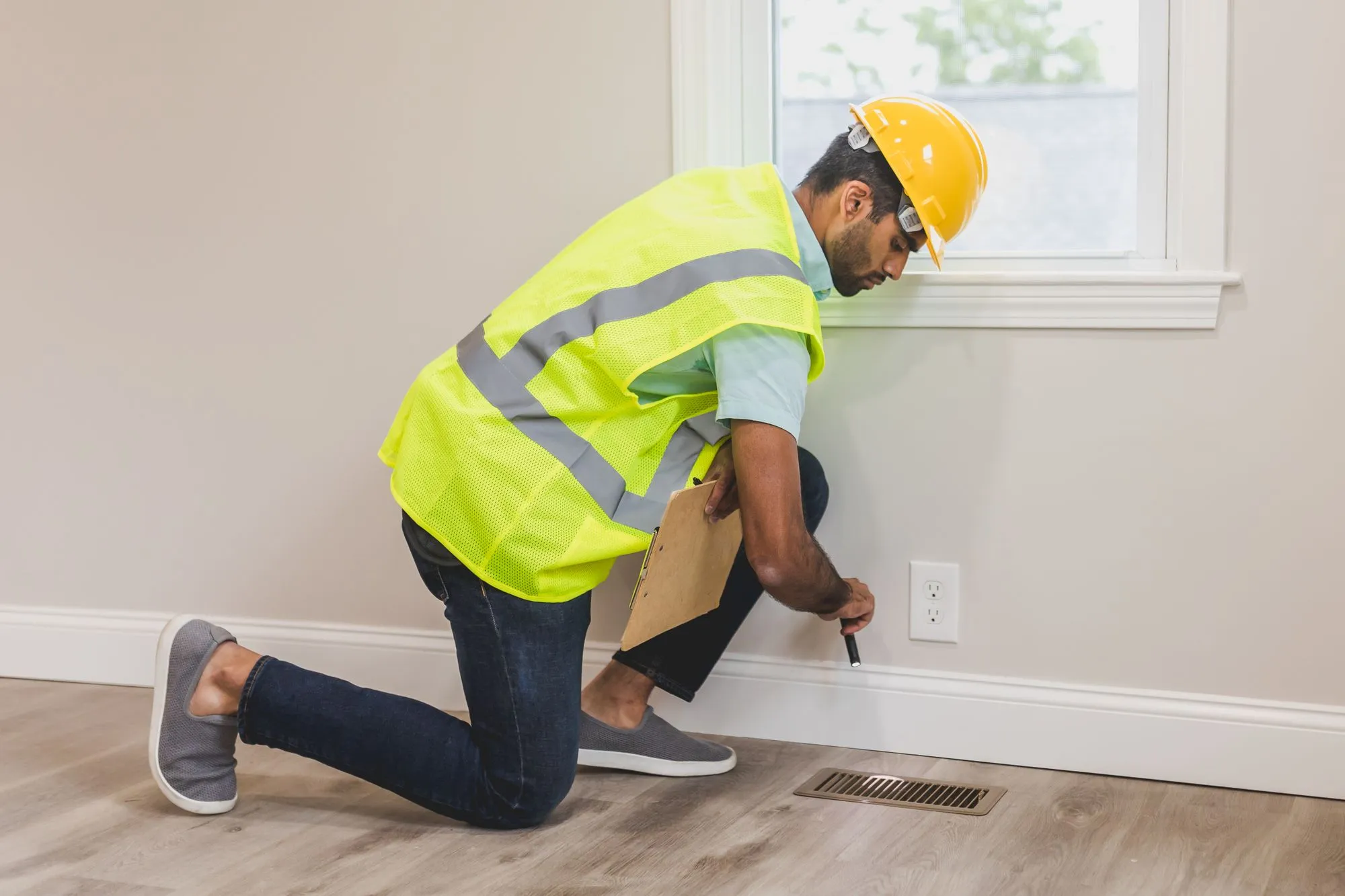
We start with the house, not a test. A real mold inspection means looking at the places moisture shows up, using a moisture meter and listening to what you have noticed. The meter finds the wet material, and the wet material tells us where growth is likely.
If testing is the right call, we say so and we explain why before we do it. If it is not, we say that too, and we tell you what to fix. Mold in a basement or crawl space usually traces back to water you can find without a lab.
Sources
Checked against these pages in October 2026.
- CDC, Mold and Your Health
- NIOSH, Mold: Testing and Remediation
- EPA, A Brief Guide to Mold, Moisture and Your Home, Mold Testing or Sampling, and Mold Remediation in Schools and Commercial Buildings, Chapter 3
- OSHA, A Brief Guide to Mold in the Workplace
- University of Connecticut Environmental Health and Safety, Facts About DIY Mold Test Kits
- U.S. Navy and Marine Corps Public Health Center, Facts About Home Mold Testing
- Wisconsin Department of Health Services, Mold FAQ
- Massachusetts Department of Public Health, Mold Cleanup, Repairs and Excessive Moisture Control
- American Industrial Hygiene Association, FAQs About Spore Trap Air Sampling for Mold
More Questions About Mold Test Kits
Why did my petri dish grow mold when I cannot see any?
Because mold spores are in the air everywhere. The EPA says spores float through both indoor and outdoor air, and NIOSH says no indoor space is completely free of them. A dish left open will collect some.
Does a negative kit mean I am in the clear?
No. Neither a clean dish nor a dirty one tells you whether hidden growth is behind a wall. NIOSH says a thorough visual inspection or noticing musty odors is more reliable than air sampling for finding problems.
What is a safe level of mold in a house?
There is no federal number. The EPA says no federal limits have been set for mold or mold spores, and Wisconsin's health department says there is no specific number that defines safe or unsafe exposure.
Will a buyer or an insurer want a test?
Sometimes. If a buyer, lender, or insurer asks for one, ask them what they require and in what form before you spend anything. A kit from the hardware store is a poor bet for that purpose.
- Started in Gettysburg in 2012
- IICRC AMRT and WRT certified
- 1-year warranty on every job
- Chuck is on the job, not just the phone