
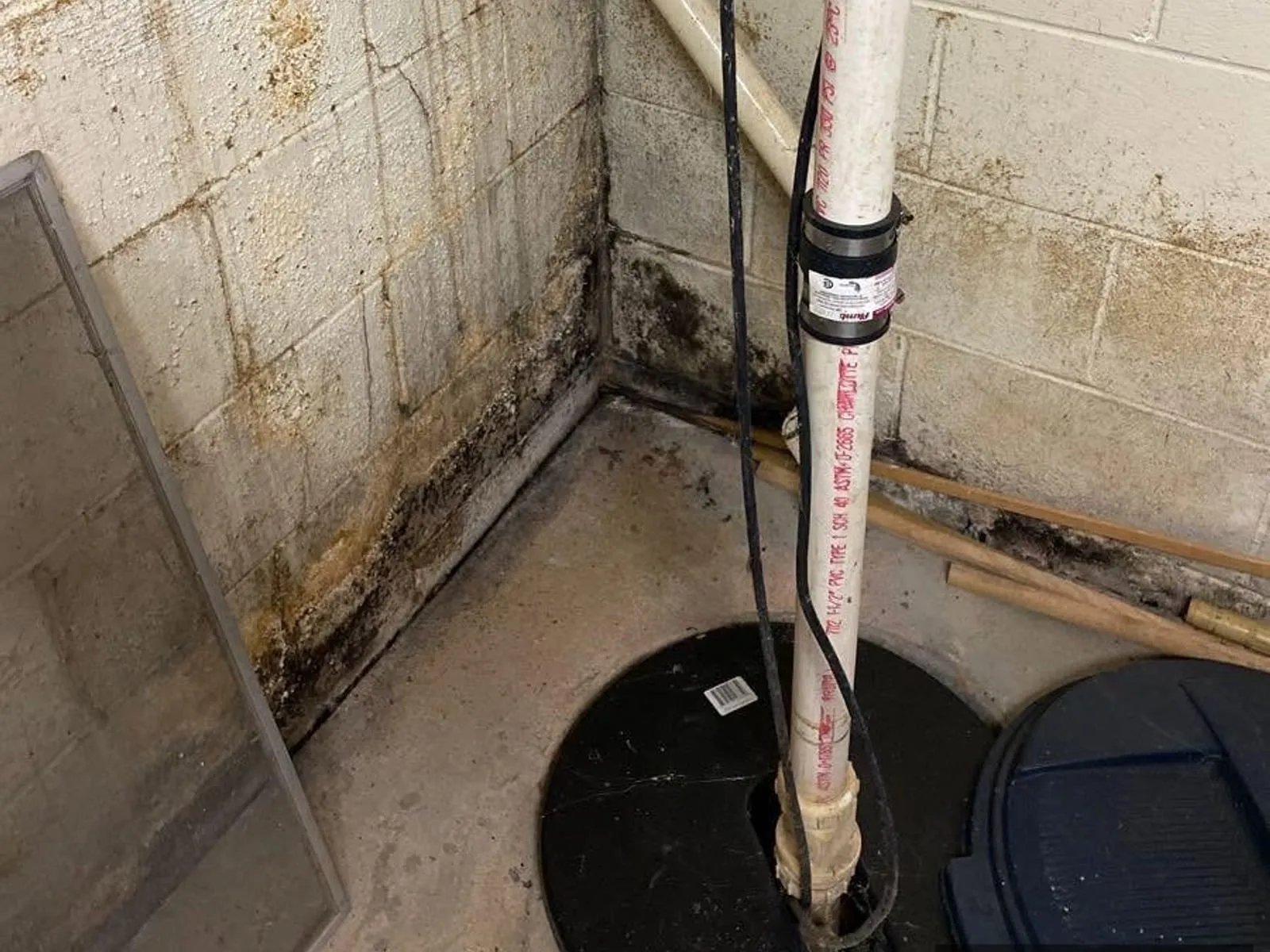
The Molds You Are Most Likely to Find in a House
Cladosporium, Penicillium, Aspergillus, and the rest. What they look like, and what actually changes when you know the name.
You have a patch of something dark on a wall, and the internet gave you a list of names to choose from.
The Straight Answer: The CDC says the most common indoor molds are Cladosporium, Penicillium, and Aspergillus. You cannot reliably tell them apart by color, and you do not need to, because the job is the same for all of them: clean it up and fix the moisture. The one worth noticing is Stachybotrys, since it needs a long wet stretch to grow. If you want a person to look at what you have, call us at (267) 828-9088.
Which Molds Show Up Most in Houses?
The CDC names three as the most common indoor molds: Cladosporium, Penicillium, and Aspergillus. The Connecticut Agricultural Experiment Station adds Alternaria to that list. Here is what the Quebec government’s public health institute says about each, in plain words:
| Mold | What it often looks like | Where it tends to turn up |
|---|---|---|
| Cladosporium | Olive-green to olive-brown, velvety | Painted window frames, paper, textiles |
| Penicillium | Shades of green, sometimes white | Wallboard, and the main mold found indoors after a flood |
| Aspergillus | Grey to greyish-green, depending on the species | Dampened building materials, humidifiers, air ducts and filters |
| Alternaria | Turns greenish-black or olive-brown with age | Floors, carpets, mattress dust |
| Aureobasidium | White, pink, or cream, then black and velvety | Damp bathrooms and kitchens, grout, window sills |
| Chaetomium | White, then tan-gray | Wood, sheetrock, and other cellulose materials after water damage |
| Stachybotrys | Black, shiny, and slimy when wet; powdery or sooty when dry | Wet drywall paper, wood, and other cellulose materials |
Treat the looks as a rough description, not a lineup. They vary with the surface, the age of the colony, and the light.
Can You Tell the Type by Color?
No. The CDC says mold can look like spots of many different colors. The EPA says molds come in many colors, and often more than one type grows in the same area. Telling the type from a photo is unreliable.
A lab can name the genus under a microscope. Even then, the name does not change how the wall gets cleaned.
Is “Black Mold” Its Own Type?
Not really. The EPA says “black mold” is not a species or a specific kind of mold, and neither is “toxic mold.” When people say black mold, they sometimes mean Stachybotrys chartarum. The EPA also says no one can tell whether a mold is producing mycotoxins just by looking at it.
We keep the health picture calm and accurate. The CDC says exposure to damp, moldy environments may cause a variety of health effects, or none at all. The CDC says people with asthma or mold allergies can have stronger reactions, and people with weakened immune systems can get lung infections. If you are worried about symptoms, talk to your doctor. If you want the longer version, our black mold page covers it.
What Does the Type Change?
Less than you would think. Cleanup does not depend on the name. What the type can do is tell a story about the water.
- Stachybotrys needs very wet or humid conditions lasting days or weeks, according to the Quebec institute, and it grows on cellulose materials like paper and wallboard paper. If it is there, that material has stayed very wet or humid for a while.
- Chaetomium shows up on cellulose materials in water-damaged buildings.
- Penicillium is what they found most often indoors after floods.
- Cladosporium and Aureobasidium tend to turn up on window frames, grout, and damp bathroom surfaces.
A pro reads any of this together with moisture readings, not on its own.
Do You Need to Test to Find Out?
Usually not. The CDC does not recommend mold testing, and the EPA says that if mold is visible, sampling is usually unnecessary. Testing makes sense in a few cases, like a musty smell with nothing visible, and we cover them in our guides on home test kits and reading a mold test report.
If the patch is bigger than about 10 square feet, or came from sewage or flood water, skip the identification step and call. That is what mold remediation is for.
Sources
Checked against these pages in October 2026.
- CDC, Mold and Your Health
- EPA, Mold Course, Chapter 1 and A Brief Guide to Mold, Moisture and Your Home
- Connecticut Agricultural Experiment Station, Indoor Molds and Their Management
- Institut national de santé publique du Québec, Mould Compendium fact sheets for Cladosporium, Penicillium, Aspergillus fumigatus, Alternaria, Aureobasidium, Chaetomium, and Stachybotrys
More Questions About Types of Mold
Is white mold dangerous?
The EPA says molds come in many colors, including white, and the CDC says exposure to damp, moldy places may cause a variety of health effects, or none at all. White does not make it safer or worse. White powder on masonry may not be mold at all, so read our guide on efflorescence vs. mold.
Why are there different colors in one patch?
More than one kind of mold can grow in the same area, the EPA says. Some molds also change color as they age, and the Quebec public health institute describes this for Aureobasidium and Chaetomium. A patch with a few colors does not mean something rarer.
Does every mold produce toxins?
Not necessarily. The EPA says some molds can produce mycotoxins, and that no one can tell whether a mold is producing them just by looking. It does not change how we clean up. If you are worried about symptoms, talk to your doctor.
Can I send a sample off to find out which type I have?
You can, but the answer rarely changes the job. The CDC says you do not need to know the type of mold, and the EPA says sampling is usually unnecessary when mold is visible. Our test kit guide covers when testing earns its cost.
We Will Tell You What It Needs, Even If That Is Nothing.
(267) 828-9088Request an inspection- Started in Gettysburg in 2012
- IICRC AMRT and WRT certified
- 1-year warranty on every job
- Chuck is on the job, not just the phone